


Why Practice Yin Yoga? A Path to Yin-Being
Updated: Jun 22
In a culture that celebrates doing, achieving, and striving, Yin Yoga offers something radically different: an invitation to slow down.
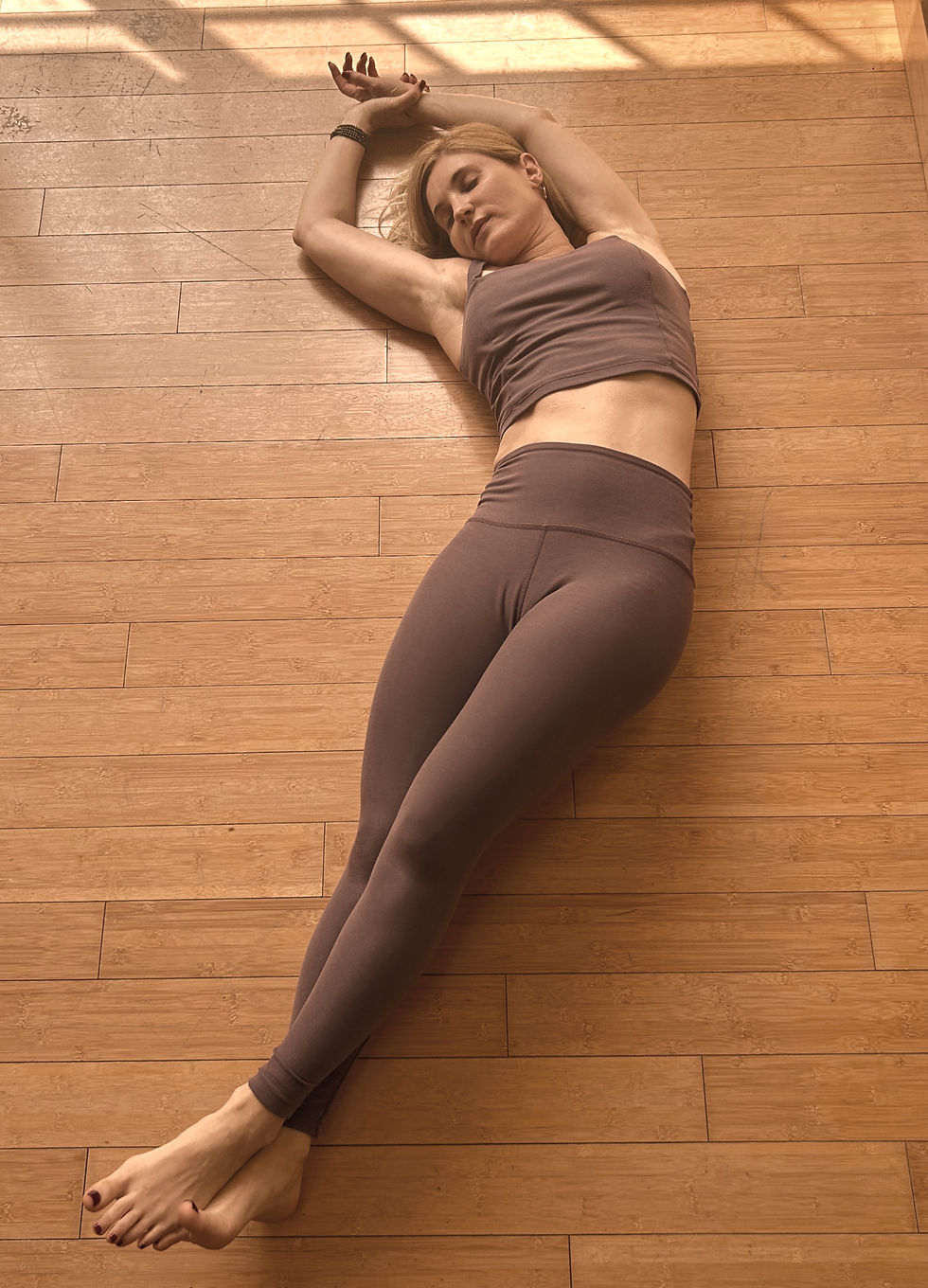
Unlike more dynamic styles of yoga that emphasize muscular effort and movement, Yin Yoga invites us into stillness. Poses are held for several minutes at a time, allowing the body to soften and the mind to settle. What initially appears to be a simple physical practice often becomes something much deeper.
Over the years, I have come to see Yin Yoga not simply as a style of yoga, but as a doorway into what I call Yin-Being — the capacity to rest in awareness, receive life as it is, and cultivate a relationship with ourselves that is rooted in presence rather than doing.
The Physical Benefits of Yin Yoga
Yin Yoga targets the body's deeper connective tissues — fascia, ligaments, tendons, and joint capsules.
As we age, these tissues naturally become less hydrated and less resilient. The gentle, sustained stress of Yin Yoga helps maintain mobility, adaptability, and healthy range of motion throughout the body.
Students often say they experience:
Improved flexibility and mobility
Reduced muscular tension
Greater ease in the hips, spine, and shoulders
Improved posture
A sense of spaciousness throughout the body
Unlike exercise that relies on muscular strength and effort, Yin Yoga works through surrender, patience, and time.
In this way, Yin Yoga teaches us that not all transformation requires effort.
The Emotional Benefits of Yin Yoga
When we become still, we often encounter ourselves.
The distractions of daily life fall away and emotions that have been pushed aside may begin to surface. Sadness, frustration, grief, joy, tenderness, longing, gratitude — all are welcome.
Yin Yoga creates a safe container for emotional awareness.
Rather than immediately reacting to discomfort or trying to change our experience, we learn to stay present. We develop the capacity to witness emotions without becoming overwhelmed by them.
Over time, this practice can cultivate:
Greater emotional resilience
Increased self-awareness
Improved emotional regulation
Self-compassion
A deeper capacity to remain present during life's challenges
The poses become less about stretching the body and more about learning how to be with ourselves.
The Energetic Benefits of Yin Yoga
Within Traditional Chinese Medicine, health is understood as the harmonious flow of Qi, or life-force energy.
Yin Yoga is sometimes described as "needle-less acupuncture." Through long-held, mindful poses, we gently stimulate areas of the body associated with traditional meridian pathways. Within Traditional Chinese Medicine, this is believed to support the healthy flow of Qi, helping us cultivate greater balance, vitality, and ease. Many practitioners experience the practice as profoundly regulating, leaving them feeling both grounded and restored.
Each season of the year corresponds with particular organs, meridians, and emotional qualities. Through Yin Yoga, we can support these energetic systems while attuning ourselves to the rhythms of nature:
Spring invites renewal, vision, and adaptability
Summer supports connection, joy, and expression
Autumn encourages reflection, letting go, and acceptance
Winter calls us inward toward restoration and conservation
Rather than imposing our will upon the body, Yin Yoga teaches us to listen.
We begin to sense when we need activity and when we need rest. When to move forward and when to pause. When to effort and when to soften.
Yin Yoga and the Nervous System
Many of us spend our days operating from a state of subtle activation.
The nervous system becomes accustomed to constant stimulation, productivity, decision-making, and consumption.
Yin Yoga provides an opportunity to shift from doing into being.
The practice encourages activation of the parasympathetic nervous system — often called the "rest and digest" response — allowing the body and mind to move toward a state of regulation and repair.
Students frequently describe feeling:
Grounded
Calm
Spacious
Rested
More connected to themselves
These benefits often extend far beyond the yoga mat and into daily life.

What is Yin-Being?
At the heart of my teaching is the understanding that Yin Yoga is not simply preparing us for life.
It is life.
Yin-Being is the practice of relating to ourselves and the world with receptivity, presence, and awareness.
It is the willingness to pause.
To listen.
To feel.
To soften our grip on constant striving.
To trust that we do not always need to fix, improve, or optimize every moment of our experience.
In Yin-Being, we discover that there is wisdom in stillness.
That slowing down can be a profound act of courage.
The practice becomes less about achieving a pose and more about cultivating a way of being.
An Invitation
Whether you are drawn to Yin Yoga for flexibility, stress reduction, emotional healing, energetic balance, or simple curiosity, the invitation remains the same:
Slow down.
Listen deeply.
Meet yourself exactly where you are.
The body will open in its own time.
The heart will reveal what it is ready to reveal.
And beneath the noise of daily life, you may discover what has been waiting for you all along:
The quiet wisdom of simply being.
A Closing Reflection
As the Irish poet and philosopher John O'Donohue reminds us:
"May you have the wisdom to enter generously into your own unease, to discover the new direction your longing wants you to take."


Comments